Profile
Best for: A slow, freshwater weekend — swimming, kayaking and boat rides on a glassy lagoon instead of the sea. The anti-Tulum, and all the better for it.
The vibe: A sleepy Pueblo Mágico on the shore of the Laguna de los Siete Colores, a 42 km freshwater lagoon whose white limestone bed and cenote-fed depths shift through seven bands of turquoise and blue. Unhurried, affordable, and built around the water. The lagoon is also home to living stromatolites — among the oldest life forms on Earth.
Getting there from Tulum: The simplest logistics on this list. About 215 km straight south on Highway 307 — roughly 2.5 hours by car. ADO buses run from Tulum’s terminal in about 3 hours, several departures daily (~370–440 MXN). No ferry, no train, no complications.
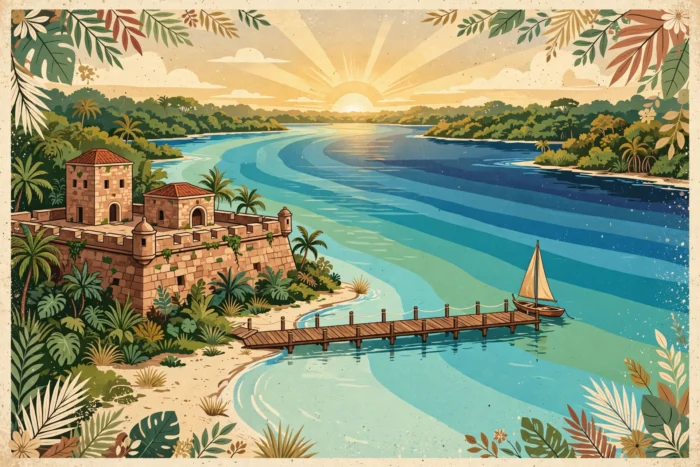
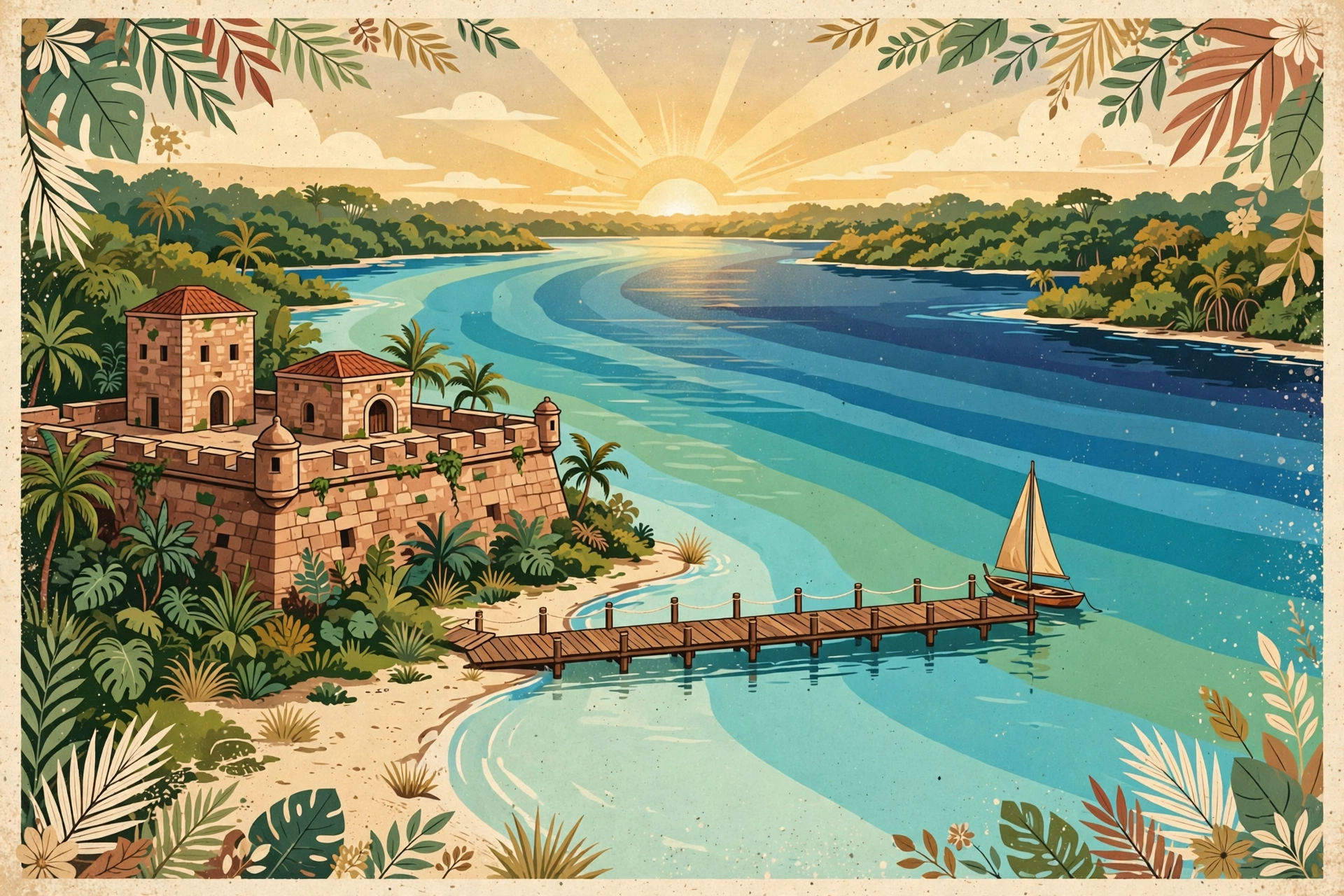
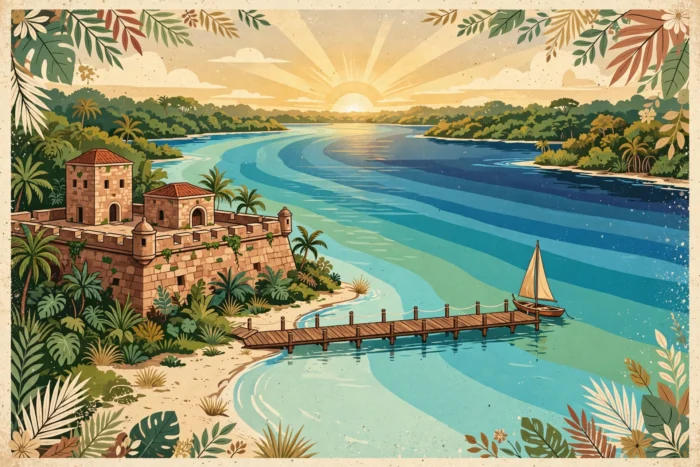
What to do: Get on the water first. The classic circuit runs by shared lancha (a pontoon boat, about 2 hours) or, slower and quieter, by sailing catamaran (3–4 hours, no engine): Cenote Negro, the dark sinkhole in the lagoon floor nicknamed the witch cenote; Cenote Esmeralda; a swim at the Canal de los Piratas, the narrow channel pirates once used to slip into the lagoon; the pale stromatolite beds; and Isla de los Pájaros, the bird island — time it late in the day, when the herons and spoonbills come home to roost. Back on land, swim at Cenote Azul, a near-perfect circle of deep navy water about 90 m deep just south of town on the Costera — cheap cash entry, swimming platforms, a restaurant on the rim, and no boats. Spend an afternoon at Cenote Cocalitos, the balneario a few kilometres south known as the stromatolite sanctuary: swings and hammocks strung over shallow turquoise, with the living rock formations roped off in the shallows — look and photograph, never touch. With a second day, float Los Rápidos, the gentle current channel about 20 minutes south toward Xul-Há, and walk the zócalo (BACALAR letters, food stalls, evening scene) and the Fuerte de San Felipe beside it — the star fort built in 1725–1733 against pirates, whose Museo de la Piratería holds Maya pieces, colonial weapons and maps, and whose ramparts give the classic panorama over all seven colors (Tue–Sun 9–7, closed Mondays). And set one alarm: sunrise kayak and paddleboard tours launch in the dark and get the lagoon glassy, empty and turning gold.
How long: Overnight — one night minimum, two is better. People do attempt it as a day trip, but that buys about three rushed hours on the water, and the lagoon at sunrise is half the point.
When to go: The colors are clearest in the dry season, roughly November to April; heavy rain can cloud the lagoon for days. One calendar quirk to plan around: most Wednesdays the lagoon rests — boat tours stop for the day (holiday weeks are the exception), so put your boat day elsewhere; swimming from shore and Cenote Azul still work on a Wednesday.
Good to know: The lagoon-protection rules are strict and they matter. No sunscreen in the water at all — not even reef-safe or biodegradable brands, whose nutrients feed the algae that cloud the colors; wear a rash guard and a hat instead. Never touch, stand or sit on the stromatolites, and keep a few metres back — they are alive, and damage takes centuries to regrow. Everything in town — fort, zócalo, docks, restaurants — is walkable. For the lagoon itself in depth, see our Bacalar Lagoons listing; this page is the town-and-trip overview, that one is the water.
Photos
Map
Reviews
Events